One major concern that came to my mind was how to manage the coding process and the project process. On one hand, developers create new branches, write code, submit changes, do code reviews, and merge the branches — that’s almost everything. On the other hand, it is hard to follow the project progress because there is no system to track it. In our case, we used the Agile development framework for collaboration and used GitHub Projects to track the status.
Manifesto for Agile software development
- Individuals and interactions over processes and tools
- Working software over comprehensive documentation
- Customer collaboration over contract negotiation
- Responding to change over following a plan
That is, while there is value in the items on the right, we value the items on the left more.
Agile principles
- Our highest priority is to satisfy the customer through early and continuous delivery of valuable software.
- Welcome changing requirements, even late in development. Agile processes harness change for the customer’s competitive advantage.
- Deliver working software frequently, from a couple of weeks to a couple of months, with a preference to the shorter timescale.
- Business people and developers must work together daily throughout the project.
- Build projects around motivated individuals. Give them the environment and support they need, and trust them to get the job done.
- The most efficient and effective method of conveying information to and within a development team is face-to-face conversation.
- Working software is the primary measure of progress.
- Agile processes promote sustainable development. The sponsors, developers, and users should be able to maintain a constant pace indefinitely.
- Continuous attention to technical excellence and good design enhances agility.
- Simplicity–the art of maximizing the amount of work not done–is essential.
- The best architectures, requirements, and designs emerge from self-organizing teams.
- At regular intervals, the team reflects on how to become more effective, then tunes and adjusts its behavior accordingly.
Implementation
Theory is theory. To truly understand and apply it, we need to practice it in real situations. Here is our approach,
- Create a project in GitHub Projects for collaboration
- Create an issue for each task, assign it to a specific person, and make sure there is no work without a task
- Use columns to show the current status (To Do / Doing / Done)
- Move cards from “To Do” to “Doing” or “Done” when a task is being developed
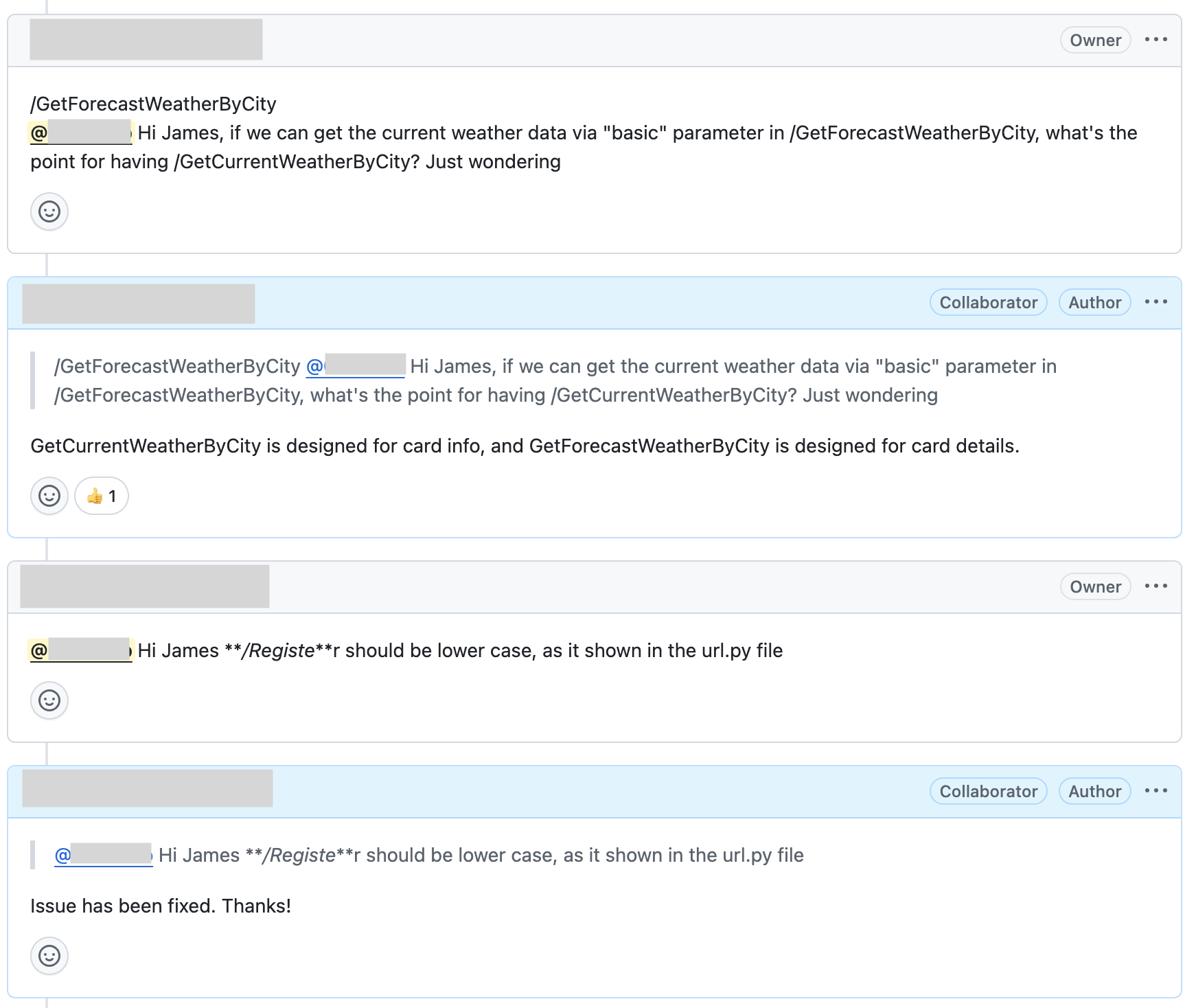
- Use the comment feature, tag people with @, and sync more regularly and asynchronously
- Check the Kanban board more often
- Have a weekly meeting to review the status together
- When committing code, add “#issue_id” to automatically link the commit to the issue card

Some findings and thoughts
- Our Agile is a small team practice. For larger teams, Agile needs to include more events, such as planning meetings, review meetings, and so on.
- In the future, we can use GitHub Automation to manage card status automatically when code is submitted.